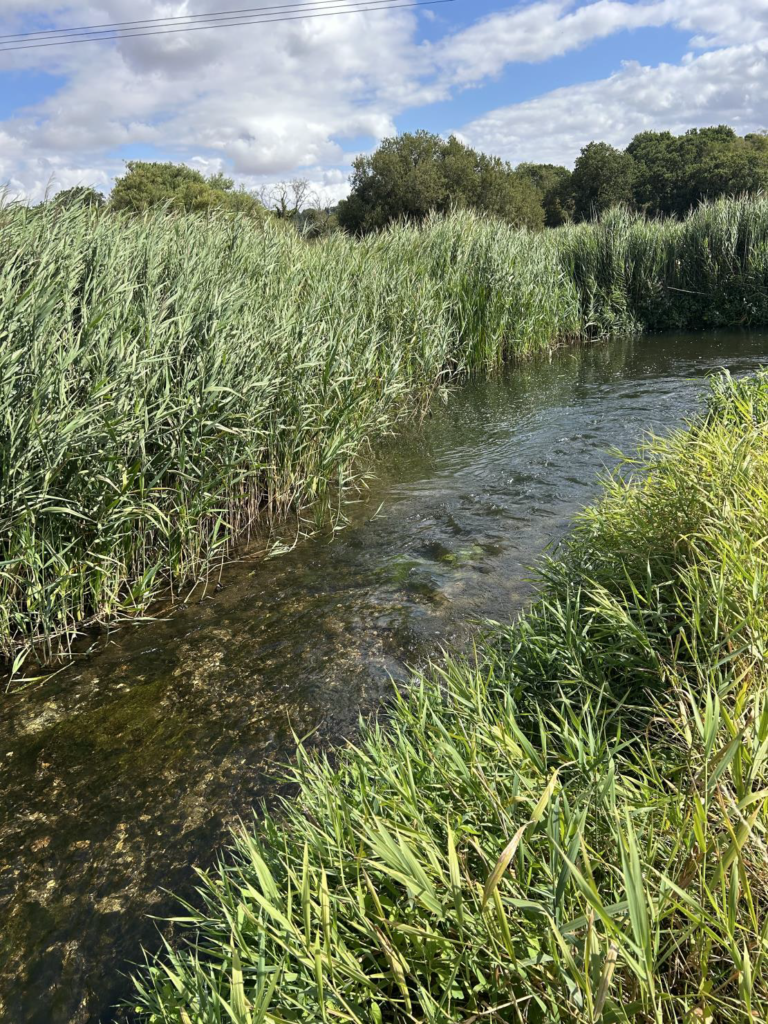
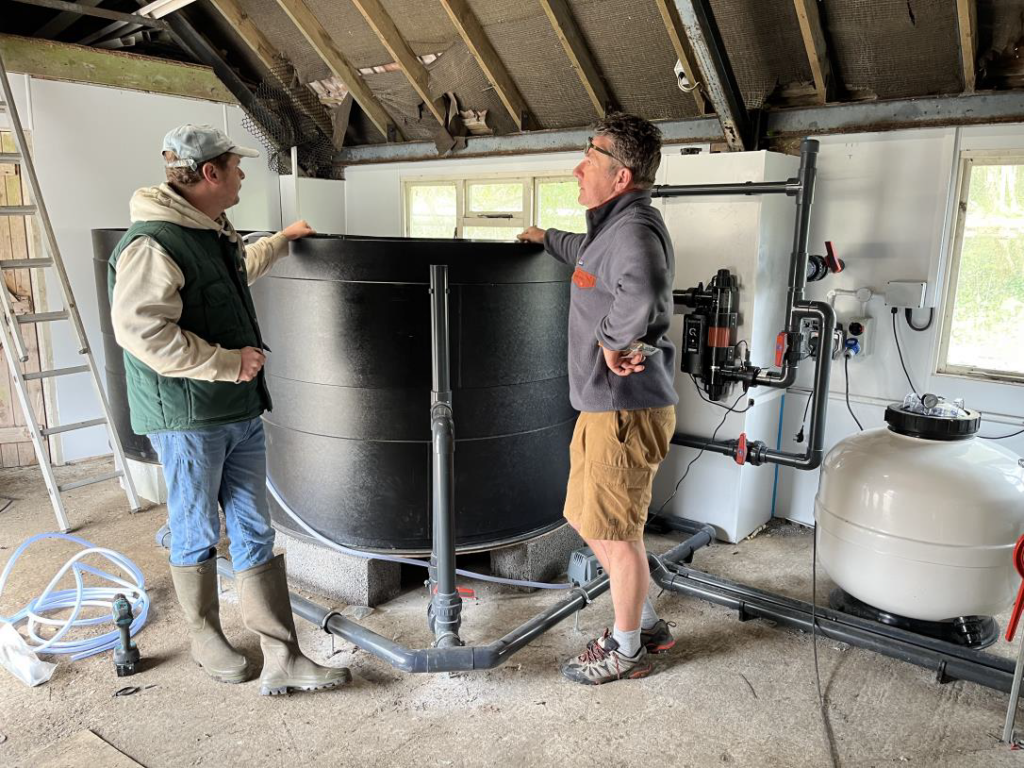
The Association’s approved Chalk Stream Salmon Restoration plan is up and running. The Environment Agency have asked us to stress that this is a Pilot Trial project. We got the green light in Dec 2025 after many years of working through and over the various hurdles. A special thank you to Zoo-scapes of Weymouth for building the hatchery by March 2026, ready to receive some salmon smolts.
Background
We are aiming to plant out fertilised salmon eggs into the upper catchment to bolster the natural population in 2027 / 28. At present the salmon run has declined so much that the river has only about 1/3 of its ‘Conservation’ capacity of fertilised eggs. Our plan is to try to add 25,000 fertilised eggs into the pristine upper catchment each year for the next few years, using a range of different types of protective egg boxes. Efforts will be made to improve the conservation of salmon returning in coastal water as well.
We have not been able to catch up the half a dozen adult fish, instead, we have been ‘encouraged’ to grow on smolts and then harvest eggs off them, to be planted out. This is an OK idea but there are no salt water facilities accessible in England ! However, our contacts in North America (Maine) say we can do this in fresh water, so that is what the F & P are doing. This concept has also been approved by Prof Colin Bull of Stirling University. This method is more costly and will take longer to achieve our goals.
We are also working with Southwest Rivers and GWCT who are running a trial using Frome smolts and Tamar smolts and rearing these on in a university saltwater facilities in Wales. This is a parallel project with the aim to see which is the most cost effective solution.
Stage 1 of our project
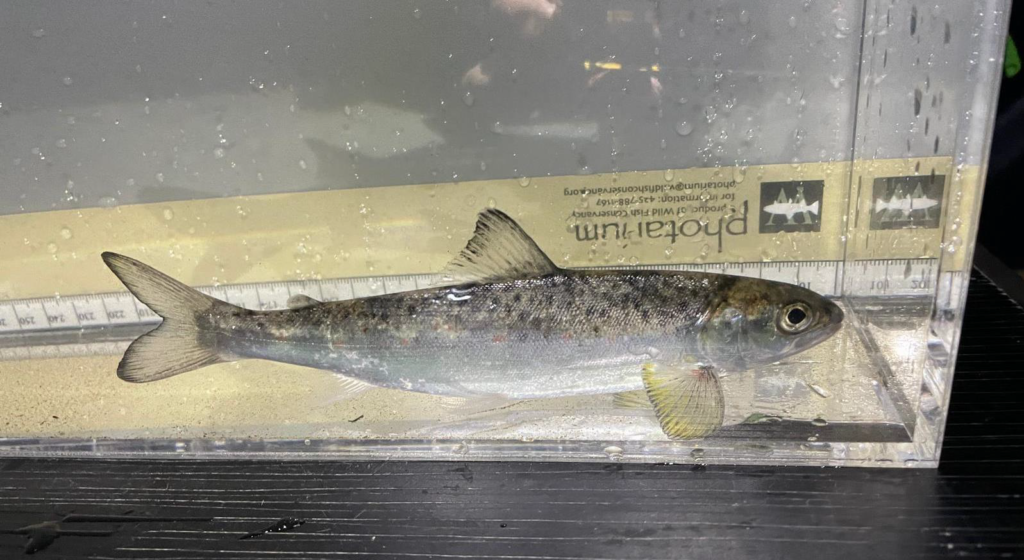
The salmon hatchery is running well and the smolts which were caught up at East Stoke in April 2026 and are growing on well in freshwater. Our 1st smolt. Thank you to GWCT.
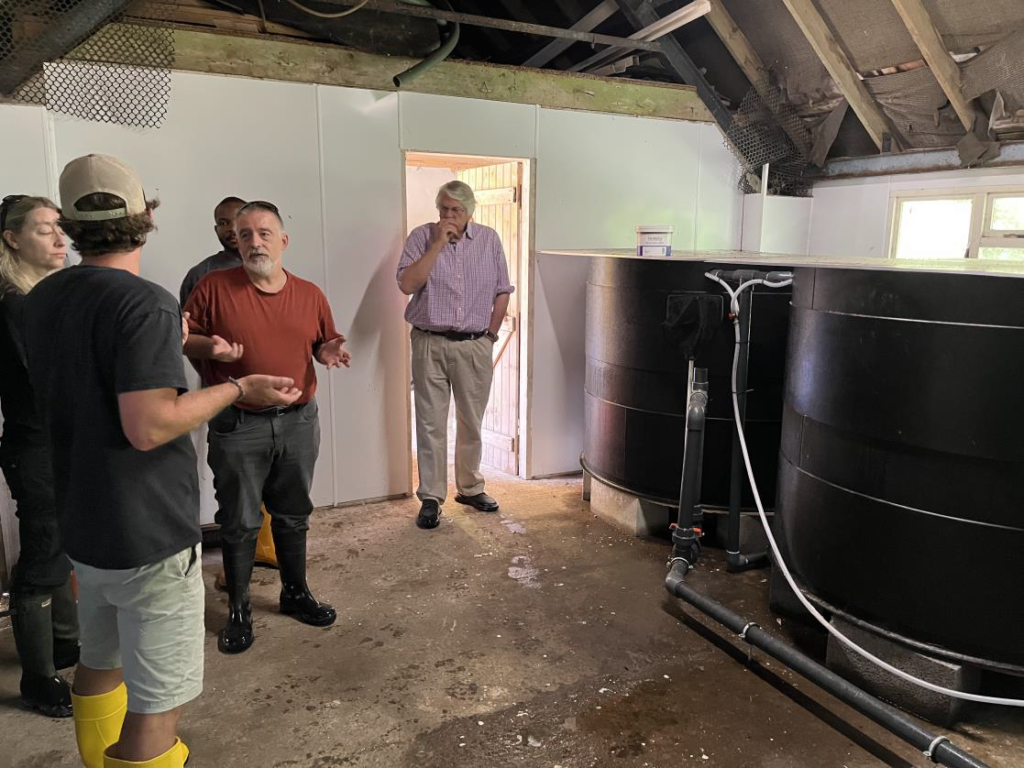
EA visit in July 2026 below.
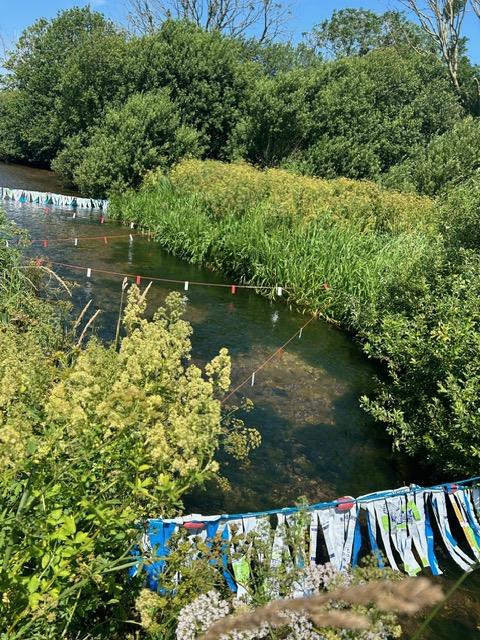
Stage 2 of our project: Weed Protection
As per last year, we are erecting some protective weed fencing on patches of weed below known redds. GWCT’s research in 2019 shows that there are 400% more fry where there is weed, than if there is none. Therefore, we are protecting patches of weed from being grazed out by the swans. These patches are small in length, perhaps 20 – 40m and the sewelling works best on narrow streams. Areas are selected based on the annual redd count the previous winter.
Stage 3 of our project: Gravel Washing
We plan to try to improve the natural spawning areas for the few migratory salmon that make it back. The gravel river bed in places is becoming very silted and compacted.
The recognised remedy is to jet wash the gravel. The ideal size of gravel is around an inch to an inch & a half.
We hope to have some volunteer work parties in Sept 2026, if you would like to help us and can use a fork or rake and fancy a morning paddling in the river, please contact us with your details, so that we can let you know where and when. Some refreshments will be provided.